
Education is not just about memorizing facts, it is a gradual journey of growth that shapes how students at a private preschool in Miami think, communicate, and understand the world. From early childhood education through lower and upper school, each stage builds on the previous one, helping students develop academically, socially, and emotionally. While the subjects may evolve, the core goal remains the same: to prepare students to become capable, curious, and independent learners.
Let’s take a closer look at each stage and how it contributes to a student’s overall development, laying the foundation for lifelong learning and success.
Building the Foundation Through Early Childhood Education
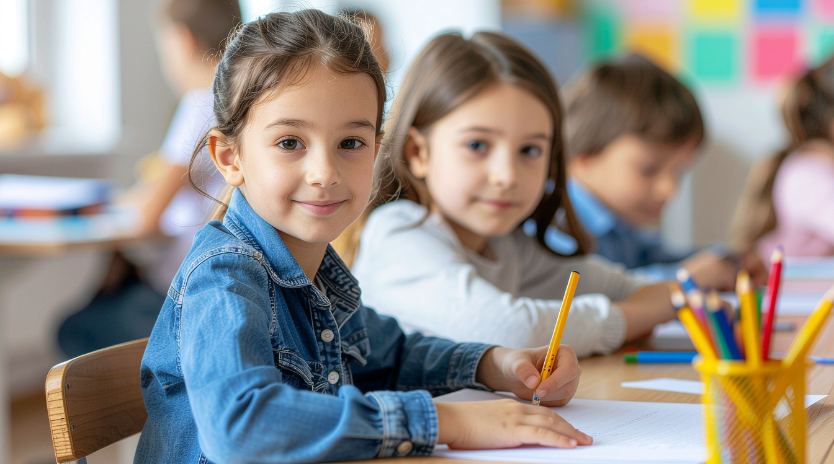
Early childhood education, typically covering preschool and kindergarten, focuses on laying the groundwork for all future learning. At this stage, children are not expected to master complex academic content. Instead, they develop essential skills that support learning in later years. One of the most important areas of development is language. Children learn to express their thoughts, expand their vocabulary, and begin to understand how communication works. Storytelling, songs, and conversations play a major role in this process. These activities help children develop listening skills and comprehension, which are crucial for reading later on.
Basic cognitive skills are also introduced through play-based learning. Children explore numbers, shapes, colors, and patterns. They begin to recognize letters and sounds, which prepares them for reading and writing. Motor skills development is another key focus. Activities such as drawing, cutting, and building strengthen fine motor skills, while running and playing outdoors develop gross motor abilities. These physical skills support tasks like writing and overall coordination.
Social and emotional learning is equally important. Young children learn how to interact with others, share, take turns, and manage their emotions. They begin to understand rules and routines. These early experiences shape their ability to collaborate and build relationships in school. In essence, early childhood education is about creating a love for learning. Children at a private preschool in Miami gain confidence, independence, and the foundational skills they will build upon in the years ahead.
Developing Core Skills During Lower School (Grades 1–4):
As students enter lower school, the focus shifts toward developing core academic skills in a more structured way. This stage is crucial because it establishes the fundamentals of literacy, numeracy, and critical thinking.
Reading becomes a central focus. Students move from recognizing letters and sounds to reading simple texts and eventually more complex stories. They learn comprehension strategies, such as identifying main ideas and making predictions. Writing skills also develop, beginning with simple sentences and progressing to short paragraphs and stories. Mathematics instruction becomes more formal. Students learn basic operations such as addition, subtraction, multiplication, and division. They also begin to understand concepts like time, money, and measurement. Problem-solving is introduced, helping students apply mathematical thinking to real-life situations.
In addition to language and math, students are introduced to science and social studies. In science, they explore the natural world, learning about plants, animals, weather, and basic physical concepts. In social studies, they begin to understand communities, cultures, and simple aspects of history and geography. Another important highlight of lower school is the development of learning habits. Students learn how to follow instructions, complete assignments, and manage their time. Teachers guide them in building responsibility and independence, though support is still heavily provided. By the end of lower school, students are expected to have a solid foundation in reading, writing, and math, as well as the confidence to engage with more challenging material.
Expanding Knowledge and Independence in Upper School (Grades 5–8)
Upper school marks a significant transition in a student’s educational journey. At this stage, students deepen their knowledge, develop critical thinking skills, and begin to take greater responsibility for their learning. Academic content becomes more complex across all subjects. In language arts, students analyze texts, identify themes, and develop stronger writing skills. They learn to organize their ideas, support arguments with evidence, and write essays. Reading is no longer just about understanding the story, it is about interpreting meaning and thinking critically.
Mathematics advances into more abstract concepts. Students work with fractions, decimals, percentages, and basic algebra. They learn to solve multi-step problems and understand mathematical reasoning. This stage prepares them for more advanced math in high school. Science becomes more inquiry-based and detailed. Students study topics such as ecosystems, energy, the human body, and basic physics and chemistry concepts. They conduct experiments, analyze results, and learn the scientific method, which encourages logical thinking and curiosity.
One of the most important developments in upper school is independence. Students are expected to manage their assignments, plan their time, and take responsibility for their learning. Teachers provide guidance, but students are encouraged to think for themselves and solve problems independently. Critical thinking and problem-solving become central skills. Students are asked to analyze information, evaluate different viewpoints, and form their own opinions. These skills are essential not only for academic success but also for real-world decision-making.
By the end of upper school, students are more confident, capable, and prepared for the challenges of high school. They have developed not only academic knowledge but also the skills needed to learn independently and think critically.
Each stage of education plays a vital role in a student’s development, beginning as early as a private preschool in Miami, where young learners build essential social, emotional, and cognitive foundations. Early childhood education sets the stage, lower school strengthens core skills, and upper school expands knowledge while promoting independence. Together, these stages create a continuous learning journey that shapes students into well-rounded individuals. Understanding these highlights helps parents, educators, and students appreciate the purpose behind each phase of schooling. It also shows that education is not just about what students learn, but how they grow along the way.