

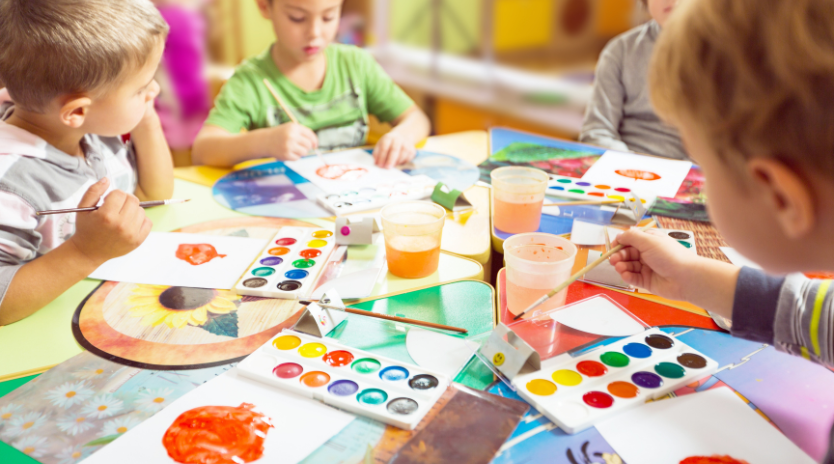
Art is one of the most natural and powerful ways children explore the world around them and understand their place within it. Through artistic experiences, children discover new ways of thinking, feeling, and communicating. They learn to observe, imagine boldly, and express themselves with confidence. Art is not just an extra subject, specifically in a performing arts preschool, it can be an essential part of healthy development. Let’s take a look at how this creative subject benefits children and why it plays such a vital role in their growth.
Understanding the Different Disciplines of Art
When many people hear the word art, they immediately think of painting or drawing. While visual arts are certainly important, art encompasses a wide range of disciplines that engage children in different and meaningful ways. Art includes dance, ballet, music, theatre, sculpture, photography, storytelling, and more.
In dance and ballet, children use movement to express emotion and build physical coordination. Music introduces rhythm, melody, and harmony, helping children develop listening skills and emotional awareness. Theatre allows children to step into different roles, enabling empathy and communication skills. Even activities such as crafting, filmmaking, or creative writing fall under the broad umbrella of artistic expression.
Beyond their intrinsic value, the arts serve as an important conduit to learning essential life skills. Through artistic practice, students are afforded multiple opportunities to fine-tune their judgment, create original ideas, and stretch their senses. They learn that there can be more than one right answer, and that experimentation often leads to discovery. Art challenges children to observe closely, think critically, and express themselves authentically. In every discipline, children are not just learning techniques, they are building tools they will carry throughout their lives.
Six Key Benefits of Art for Children
Art does far more than entertain children, it strengthens their development in profound and lasting ways. When children regularly engage in artistic activities, they build skills that support their academic success, emotional well-being, and social growth. Below are six powerful benefits of art for children:
- Enhances creativity and imagination: Art encourages children to think beyond the obvious and imagine new possibilities. Whether they are inventing a character for a play, composing a simple melody, or painting an illustration, children learn to generate ideas and explore them freely. Creativity nurtured through art helps children become innovative thinkers who are comfortable approaching challenges from different angles.
- Improves cognitive and academic skills: Engaging in the arts strengthens memory, concentration, and problem-solving abilities. Music education, for example, has been linked to improved mathematical understanding through rhythm and patterns. Theatre enhances reading comprehension and language development, while visual arts sharpen observational skills. Art teaches children at a performing arts preschool to focus, analyze details, and connect concepts, which are skills that directly support academic achievement.
- Builds emotional expression and regulation: Children often experience emotions they do not yet have the vocabulary to explain. Art provides a safe and constructive outlet for expressing feelings. Through painting, dancing, or acting, children can communicate joy, frustration, fear, or excitement in healthy ways. Over time, this process helps them better understand and regulate their emotions, leading to improved emotional intelligence.
- Strengthens confidence and self-esteem: Completing an art project or performing in front of others gives children a powerful sense of accomplishment. When their ideas are valued and their efforts recognized, they begin to see themselves as capable and creative individuals. Even small successes, like mastering a dance step or finishing a drawing, build resilience and confidence that extends beyond artistic settings.
- Encourages discipline and perseverance: Artistic growth requires practice and patience. Learning a musical instrument, perfecting a ballet routine, or refining a painting involves repetition and dedication. Through this process, children learn the value of effort and persistence. They understand that improvement comes with time and commitment, an important lesson that applies to every area of life.
- Enhances sensory and motor development: Especially in younger children, artistic activities support physical growth. Drawing and sculpting strengthen fine motor skills and hand-eye coordination. Dance improves balance, flexibility, and body awareness. Playing instruments develops precise finger movements and timing. These physical benefits contribute to overall developmental health while making learning enjoyable and engaging.
Art is far more than decoration or entertainment, it is also a powerful educational and developmental tool. Through painting, music, dance, theatre, and other creative disciplines, children build essential life skills that shape who they become. They learn to think creatively, express themselves confidently, collaborate with others, and persevere through challenges. By encouraging artistic exploration at a performing arts preschool, we give children the opportunity to discover their voices and expand their understanding of the world. In doing so, we are not simply teaching them how to create art, we are helping them grow into thoughtful, imaginative, and resilient individuals.