

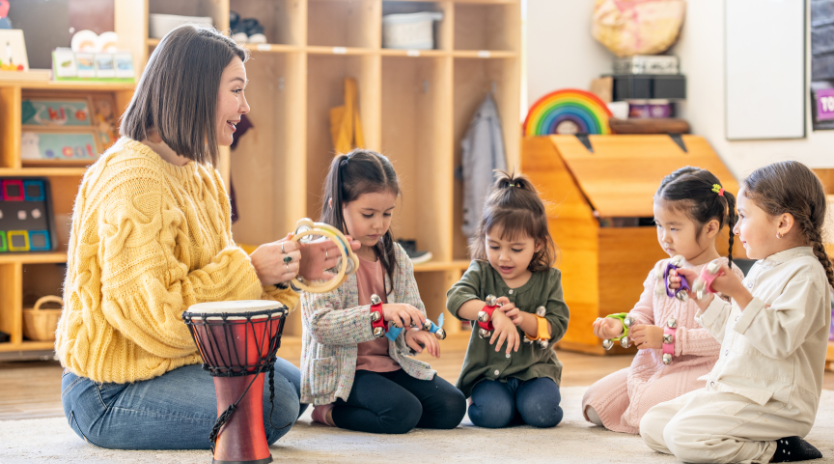
Music has been part of human culture for thousands of years, but in recent decades researchers have begun to better understand why it is so powerful especially for children. Listening to music, singing, or learning an instrument engages multiple areas of the brain at once, including those responsible for memory, language, attention, and emotional regulation. Because of this, music at a private school Miami offers, is far more than entertainment. It can play an important role in supporting children’s cognitive development from an early age and throughout childhood.
Let’s look at six fascinating ways music supports children’s cognitive development.
- Music Strengthens Memory
One of the most well-known benefits of music is its strong connection to memory. Music activates areas of the brain responsible for storing and recalling information, which is why many people can easily remember song lyrics from years ago. For children, music can significantly improve the ability to retain information. Songs often combine melody, rhythm, and repetition, which helps the brain organize and store knowledge more effectively. This is why music is frequently used to help children learn the alphabet, numbers, or new vocabulary.
When children sing songs or repeat musical patterns, they are practicing memory skills. Over time, this strengthens neural connections related to both short-term and long-term memory. These improvements can also transfer to other areas of learning, such as remembering instructions, recalling facts, or retaining information from books and lessons. Musical experiences essentially give the brain an enjoyable workout, making memory development both effective and engaging.
- Music Improves Attention and Concentration
In today’s fast-paced world, developing strong attention skills is more important than ever. Music can help children improve their ability to focus and sustain concentration. Musical activities require children to pay attention to timing, rhythm, and patterns. For example, when a child claps along to a beat, follows the rhythm of a song, or learns to play simple musical notes, they must concentrate carefully on what they hear and how they respond.
These activities train the brain to stay focused for longer periods. Over time, children who regularly engage with music often develop stronger listening skills and improved attention spans. Music can also help children practice self-discipline. Learning a song or musical sequence requires patience and repetition, encouraging children to concentrate on completing a task. These focus-building skills are valuable not only in musical activities but also in academic settings and everyday life.
- Music Supports Language Development
Music and language share many similarities. Both rely on rhythm, patterns, pitch, and sound recognition. Because of this, exposure to music can play an important role in strengthening children’s language skills. Songs introduce children to new words and phrases while helping them understand how sounds form patterns. Singing also encourages children to practice pronunciation, rhythm in speech, and listening carefully to how language flows.
Music naturally includes repetition, which helps the brain absorb and remember language more easily. When children at a quality private school Miami offers, listen to songs or sing lyrics, they repeatedly hear and practice words, phrases, and sound patterns. This repetition helps reinforce vocabulary and strengthens communication skills. Music can also enhance phonological awareness, which is the ability to recognize and work with the sounds within words. This skill plays an important role in developing reading and communication abilities. Children who are regularly exposed to music often develop stronger listening and sound-recognition skills that support language development.
- Music Encourages Creativity and Problem-solving
Music naturally stimulates creativity. When children sing, dance, or experiment with sounds, they are exploring new ways to express themselves and interact with the world around them. Creative activities play a key role in cognitive development because they encourage flexible thinking. When children invent melodies, improvise rhythms, or create their own songs, they are using imagination and problem-solving skills.
For example, a child experimenting with different sounds on a simple instrument must figure out how to produce the sound they want. This process involves exploration, trial and error, and creative thinking. Creative thinking helps children develop cognitive flexibility, the ability to approach challenges from different perspectives. This skill supports innovation, curiosity, and resilience when solving problems. Music offers a safe and enjoyable environment for children to explore ideas, take creative risks, and discover new possibilities.
- Music Supports Emotional Intelligence
Cognitive development is closely connected to emotional development. Music can help children better understand their emotions and learn how to regulate them. Different types of music can evoke different feelings. A calm melody may help children relax, while an energetic rhythm might encourage excitement or movement. By experiencing these emotional responses, children begin to recognize how music influences mood and emotional states.
Singing and musical expression also give children ways to communicate feelings they may not yet have the words to describe. This form of expression can be particularly helpful for younger children who are still developing emotional vocabulary. Music can also support empathy and social understanding. When children sing or make music together, they learn to listen to others, coordinate their actions, and share a collective experience. These activities promote emotional awareness and strengthen social connections.
- Music Strengthens Pattern Recognition and Early Mathematical Thinking
Music is built on patterns. Rhythm, tempo, melody, and musical structure all follow organized sequences that the brain learns to recognize and predict. When children listen to music or participate in musical activities, they are constantly identifying and responding to these patterns. For example, keeping a steady beat, repeating rhythmic sequences, or recognizing changes in melody requires the brain to process timing, order, and structure. These are the same types of cognitive skills used in mathematical thinking.
Musical rhythm in particular is closely related to concepts such as counting, fractions, and sequences. Understanding that a rhythm repeats every few beats or recognizing when a pattern changes helps children practice organizing information in logical ways. Engaging with musical patterns encourages the brain to analyze, predict, and organize information, skills that are essential for problem-solving and analytical thinking. Over time, these experiences help strengthen the brain’s ability to recognize patterns not only in music, but in many other types of learning as well.
Music is far more than a fun activity for children, it is a powerful tool that supports memory, attention, language skills, creativity, and emotional understanding. Through singing, listening, moving to rhythm, or experimenting with sound, children engage their brains in ways that strengthen learning and curiosity. Experiences like learning instruments such as the piano, violin, cello, guitar, flute, clarinet, saxophone, percussion, trumpet, or trombone allow children to explore music while developing important cognitive skills. For families looking for a private school Miami offers, that values artistic expression alongside academic growth, contact us today!